

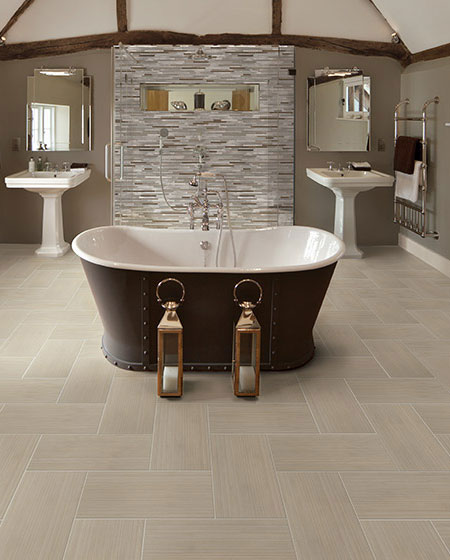
A bathroom floor in Greater Houston has a tough job. It deals with steam, splashes, and daily traffic, all while sitting over a concrete slab that can feel hard and unforgiving underfoot. If you're comparing luxury vinyl plank and tile, the right answer usually comes down to how you want the room to feel, how much maintenance you want, and how your home handles moisture.
Why concrete slabs change the conversation
Concrete slabs hold and transfer temperature, so flooring choices feel different in a bathroom than they do in a living room. Tile stays cooler and harder, which some homeowners like in hot weather. Others step onto it first thing in the morning and immediately wish they had picked something softer.
That is where waterproof luxury vinyl often stands out. It gives you better underfoot comfort and a little more warmth without giving up the moisture protection Houston homeowners need. In a bathroom that gets heavy weekday use, that difference is noticeable.
Moisture matters for another reason too. In humid conditions, materials need to perform well over a slab, not just look good in a showroom. Reading through the brand's luxury vinyl flooring guide can help you understand how wear layers, construction, and installation methods affect long-term performance.
Where tile still has an advantage
Tile has a reputation for durability because it earns it. It resists scratches, handles water well, and gives bathrooms a clean, classic finish. If you want a traditional bath design or you love the look of stone-inspired surfaces, tile remains a strong contender.
Still, performance is only part of the decision. Grout lines need ongoing cleaning, and the floor itself feels less forgiving during long mornings at the vanity. For households with kids, older adults, or anyone who prefers a quieter surface, rigid-core LVP often feels easier to live with day after day.
That tradeoff shows up often in real remodels. A homeowner visiting 5 Star Floors in Pearland may come in thinking tile is the obvious answer, then change direction after comparing how each material feels in a bathroom setting over slab.
Design matters beyond the floor
Bathrooms rarely get updated one surface at a time. New flooring changes how the vanity, wall color, and countertop all read together. That is one reason many homeowners compare materials while planning broader bathroom remodeling, not as a separate decision.
LVP also gives you more flexibility if you want a wood-look style in the bath without introducing real wood to a wet space. That softer visual can balance painted vanities and brighter finishes, especially in homes that feel a little builder-grade today. In places like Humble and throughout the Houston area, that kind of coordinated update often makes the whole room feel newer without forcing an oversized renovation.
If you're unsure how warm or cool your finishes should go, 5 Star Floors also offers a design consultation so you can compare flooring, cabinetry, and surface colors with a more complete plan in mind.
So which one makes more sense?
If your top priorities are classic style and a very hard-wearing surface, tile still deserves a close look. If comfort, easier upkeep, and waterproof performance rank higher, LVP usually fits the way modern bathrooms are used. For many concrete-slab homes in this region, LVP solves more everyday problems while still delivering a polished finish.
The best next step is to compare both materials in person and talk through how your bathroom is used. Visit your nearest 5 Star Floors showroom or request a free flooring estimate to get expert guidance for your bathroom update.


