

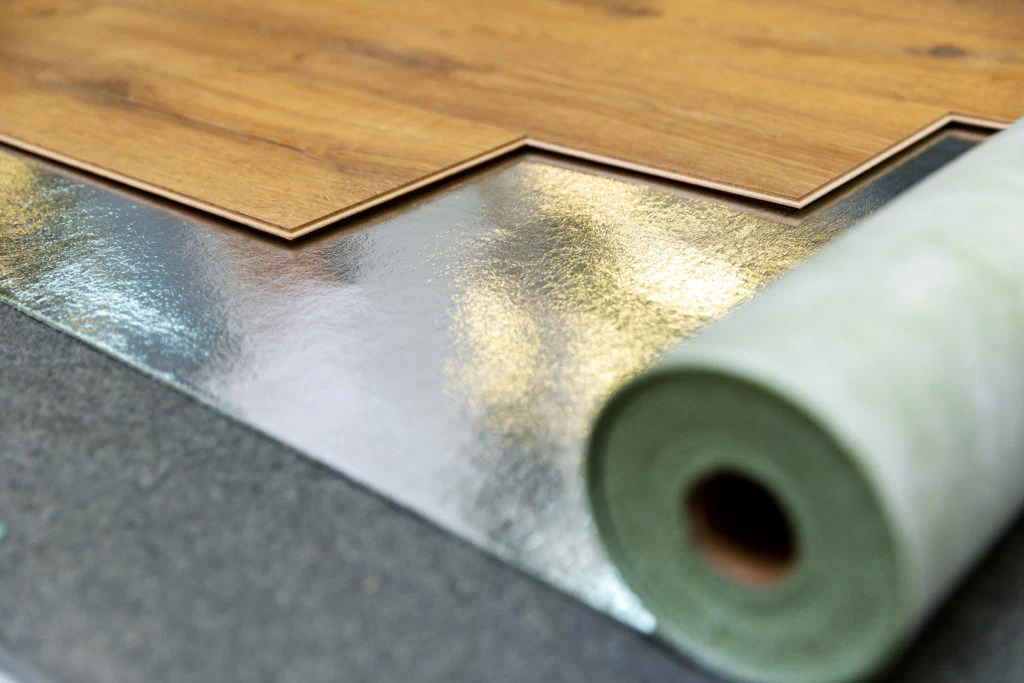
A Pearland homeowner replacing dated flooring may notice that some luxury vinyl planks have a thin cushion already bonded to the back. Others arrive without it, leaving questions about padding, moisture, sound, and installation. The short answer is simple: LVP with attached underlayment does not automatically need another layer beneath it. The right decision depends on the product, the subfloor, and the manufacturer’s installation requirements.
What attached underlayment does
Attached underlayment is a factory-applied backing fixed to the underside of an LVP plank. It may provide a small amount of cushioning, reduce sound, and help the flooring sit more comfortably over a properly prepared surface. That backing is different from the wear layer on top, which protects the printed design from everyday traffic.
The material underneath can also help smooth out minor surface variations, but it cannot correct serious dips, raised seams, loose flooring, or cracks. A level, clean, dry subfloor remains essential. If the concrete has significant unevenness, an installer may need to repair it before laying any planks.
Houston homes often have concrete slab subfloors, so moisture testing matters before installation. Attached backing does not make every subfloor condition acceptable, and it should not be treated as a substitute for moisture-control procedures. Reviewing broader waterproof flooring guidance can help clarify how water resistance, subfloor preparation, and installation fit together.
Does your LVP need more underlayment?
Usually, no. Adding a second underlayment beneath planks that already include one can create too much flexibility. That movement may stress locking edges, cause gaps, produce a hollow sound, or affect the manufacturer’s warranty.
Some products specifically allow an additional layer for sound control or another approved purpose. Others prohibit it. The installation instructions for the exact collection should always take priority over general advice. Product construction also matters: rigid-core LVP offers a stable foundation, while a thinner plank may respond differently to subfloor imperfections.
An installer should also check transitions, door clearances, cabinets, and appliance locations. Extra height from unapproved padding can create problems at these details, even if the floor looks suitable in the center of the room.
When separate underlayment may make sense
LVP without attached backing may require a compatible underlayment, especially when the manufacturer specifies one. The selected layer might improve acoustic performance, add limited cushioning, or provide a particular moisture-management feature. However, those benefits depend on using a product approved for that flooring system.
Moisture protection deserves special attention in the Houston area. Humidity, heavy storms, and slab-on-grade construction make practical preparation important. Waterproof planks still need correct installation, sealed transitions where appropriate, and a subfloor that meets the product’s moisture limits. Waterproof performance protects the flooring material, but it does not eliminate every pathway water can take beneath or around a floor.
A professional assessment can also reveal whether a room needs a different approach. Kitchens, entryways, laundry rooms, and bathrooms may require closer attention to seams, cabinetry, plumbing fixtures, and expansion space than a straightforward bedroom installation.
How to choose the right product
Start by comparing the plank’s total thickness, backing type, locking system, wear layer, and moisture rating. Then consider the room’s traffic, pets, furniture, and sound needs. A thicker attached backing is not automatically better if it conflicts with the installation instructions or the condition of the subfloor.
5 Star Floors can help you compare waterproof luxury vinyl with other LVP constructions and explain which specifications matter for your home. The company’s residential flooring installation service can also help ensure preparation, layout, and manufacturer requirements are addressed together.
In most cases, the best approach is to choose an LVP product designed for your subfloor and follow its instructions exactly. If the plank already has attached underlayment, avoid adding another layer unless the manufacturer approves it.
Visit the nearest 5 Star Floors showroom serving the Houston area, or schedule a free flooring estimate to discuss your subfloor and product options with a flooring professional.


